The Wat had a brief period as host of the Emerald Buddha, which was moved to Wat Phra Kaew in 1784. The later King Rama II. changed the name to Wat Arunratchatharam. He restored the temple and enlarged the central prang. The work was finished by King Rama III. King Rama IV gave the temple the present name Wat Arunratchawararam.

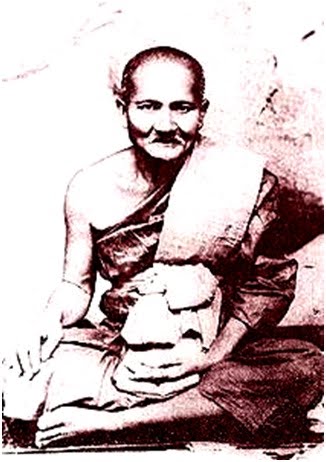
During a recent visit, managed to pay respect to Phra Ku Balad Dhamakan whom is responsible for safekeeping of this amulet. I felt indebted to a monk from Cheras, K.L. whom introduced me to Phra Ku Balad Dhamakan or else I would not be able to see the materials for making the famous Phra Somdej Song Kaiser that originated from this temple in 1870 made by Phra Somdej Puttajarn Toh for King Rama V to bring along to Germany. Somdej Puttajarn Toh later passed away in A.D. 1872.
Phra Somdej Kaiser is made from a powerful combination of more than 200 different kinds of sacred materials gathered from monasteries, stupas, guru masters of past and present from all over Thailand and the 4 sacred sites of Buddhist pilgrimage in India. The amulets are blessed for a total of 9 times by 99 senior Buddhist monks who sat in meditation of concentration and mindfullness.
We are very fortunate to be able to take some photographs of the left over materials used in making the Phra Somdej Kaiser for all visitors to see. The holy substances are displayed in a large glass cabinet. Shown in the glass cabinet display is a brochure write-up in Thai language featuring Somdej Phim Song Kaiser.


I managed to publish an image displaying the actual Phra Somdej Phim Song Kaiser produced from Wat Arun in B.E.2529. In our humble opinion, this batch is worth collecting as it contained a lot of sacred materials that took 25 years to collect and further took 3 years to be consecrated and blessed by 99 senior Buddhist masters.
With good merits we all have performed in the past, thus we have this opportunity to share knowledge with each other on the old materials used for making Phra Somdej Kaiser.
 A copy of the original temple certificate of authencity with 3 small photos on top of the cert bearing the 3 phim sizes (XL, L and S) of Somdej Kaiser B.E.2529.
Somdej Kaiser B.E.2529 middle size phim.

Displayed above is another piece of excellent Somdej Kaiser dated B.E.2548 which is also highly sought after by collectors. This is a middle size phim. Below is an older piece Somdej Kaiser with visible lacquer residue on the surface.


Further examples of B.E.2548 and B.E.2529 Somdej Kaiser are found in the pictures below.


Title:
History and Miracles of Phra Somdej Song Kaiser (Lord Buddha Image of Kaiser Model)
Top of Siamese Buddha Images Used as Amulet
Brief History of The Establishment and Miracles of Phra Somdej Song Kaiser – Top of Siamese Buddha Images used as amulet Rakang Kositaram Temple
Among Thailand’s Buddha images made from the past to the present by famous monks from different temples, the Thai society, especially those in the Buddha image circles has recognized the holiness and miracles of Phra Somdej Song Kaiser (Lord Buddha Image of Kaiser Model). Somdej Phra Buddajan Toh Promrangsi miracles have been well known for a long time from the past to today. It’s therefore most appropriate to have a record of Phra Buddajan Toh Promrangsi history and miracles for collectors of new generation to appreciate.
Phra Somdej Song Kaiser is hard to acquire or even to have a look since Somdej Phra Buddajan Toh Promrangsi made only 300 of them to offer to King Chulalongkorn (King Rama V) before His Majesty traveled to Europe. Most of Buddha image collectors only heard about this famous model of Buddha images. Only a few people have the privilege to actually look at one. Many people may wonder why a Thai Buddha image has a foreign name. The new generation is surprised to hear the name of the model. Many people know Phra Buddajan Toh Promrangsi history but many have forgotten it. I’m afraid that the holy Buddha image made by Phra Buddajan Toh Promrangsi may disappear from the people’s memory and this world. That is why I have collected information for readers and followers of Somdej To to read. After reading it, you’ll know why this holy and beautiful Buddha image is having 5 lotuses at the base that has an implication to King Chulalongkorn, upholding Buddhism, Thailand’s national religion and why His Majesty is known among collectors as “Phra Somdej Song Kaiser” with miracles recognized for a long time among people in and outside the Buddhist image collection circles.
From the history and legend inherited to this day, Phra Buddajan Toh Promrangsi made the Buddha images on Tuesday, on the 9th day of the waxing moon at 09.00 hours, B.E. 2413 (A.D. 1870). The images were made from five special powder materials as follows;
1. Ithijai powder
2. Patamong powder
3. Maharaj powder
4. Trinisinghe powder and
5. Phudhakun powder
Other materials used are – cooked rice, Kluay Nam (a kind of banana), Kluay Homcan (a kind of banana), 108 kinds of pollen such as snowy orchid, nickernut, crown flower, betel pepper leaf, candlewick or candle wax lit in homage of Lord Buddha, 7 salt licks, 7 forest soils, Sema lichen, scurf of Lord Buddha, pink cassia leaf, Tanowsri sachet powder, water leaked from a rock in a cave, Tan leaf powder, shell powder, cooked rice and delicious foods. They were all blended and dried, then mixed with boiled sugar cane juice. They are finally threshed with Tang-iew oil. The materials were pressed to mould. Each Buddha image is 3.7cm wide, 5.8cm tall and 5 mm thick, the size of a match box. Each Buddha image was well moulded with five lotuses at the base. Before the image was called Phra Somdej Pim Song Kaiser, Luang Po Somdej Toh called it “Phra Somdej Pim Piset” (specially printed Buddha image). Luang Po Somdej Toh made about 300 images and spent three months to consecrate them. He offered all the images to King Chulalongkorn before His Majesty traveled abroad in 1870.
Phra Somdej Pim Song Kaiser became well known when King Chulalongkorn visited Germany. That’s why the images were called Phra Somdej Pim Song Kaiser till today. From the history and having been relayed to the present generation by the aged, especially the entourage of King Chulalongkorn during His Majesty’s trip to Germany, Europe, the miracles of this Buddha image with pointed face, Garuda chest, round head and five lotuses at the base were related to an event. After greeting Kaiser William 1 of Germany, King Chulalongkorn sat down to talk to Kaiser William 1 who suddenly noticed red, green and yellow lights around King Chulalongkorn’s shirt pocket and asked the King what he had inside his pocket. King Chulalongkorn picked up a Buddha image of Phra Somdej Pim Piset and showed to Kaiser William saying that was a Buddha image revered by all Thai Buddhists and used as an amulet to protect himself from any dangers. Owning one also brings peace of mind.
Kaiser William was interested in the amulet and started to have faith in the Buddha image. King Chulalongkorn then offered the Buddha image to Kaiser William as a souvenir of his trip to Germany. Kaiser William received the image and put the Phra Somdej Pim Piset into his shirt pocket. The same lights shown out of his pocket surprising Kaiser William and his people present there. Kaiser William had more faith in Phra Somdej and felt that the Siamese King had so much reserved power and intelligence. King Chulalongkorn then named the Buddha image in honour of Kaiser William I by combining the original name of Phra Somdej Pim Piset with the name of Kaiser William as “ Phra Somdej Song Kaiser” from then on. The general public in Thailand and abroad had so much respect to that model of Buddha image because of its value, might, holiness and miracles that are hard to describe in words. A large crowd flocked to Rakang Kositaram Temple to obtain Phra Somdej Song Kaiser at that time but they were all disappointed since the amulets were not available at all.
From then onward, the Buddha image with pointed face, Garuda chest, round head and five lotuses at the base implying King Rama V. The middle lotus or petal is larger than those on the sides. Everone then called this Buddha image in line with what’s conferred by King Chulalongkorn “Phra Somdej Pim Song Kaiser” until this day.
At that time, subjects in the Royal Palace assessed the price of each Buddha image as high as 5 chang. This amount of money could buy some 100 rai of land at that time. The value of the Buddha image is priceless today and it’s not available anymore. It’s only a legend of holiness to be related to the next generation. Those who possess them are highly merited.
If you want to see Phra Somdej Pim Song Kaiser, Luang Pu had collected 199 kinds of holy materials from Rakang Kositaram Temple, Mai Amaratos Temple, Indra Vihara Temple and Chaiyo Temple and elsewhere both inside and outside the country (Thailand) to produce Phra Somdej from a real Phra Somdej Song Kaiser. If you want to have one, they are available at Team 4, Arun Rajavararam Temple (Temple of Dawn) or may call for an enquiry at 466-0457 or 466-9854, In Malaysia call 0166269657 For amulet Phra Somdej Pim Song Kaiser.
A note of advice – please collect only for your own personal collection to be part of the history in the making of Phra Somdej Song Kaiser. If possible refrain from earning a profit by trading in this holy amulet. The reason being that it took many years to collect all the holy materials to make these beautiful Somdej amulets therefore everyone should be able to own a piece or two for ourselves and our future generation to partake merits in the noble work of our Teachers.
You should know as well that Somdej Phra Buddajan Toh Promrangsi was cremated at the royal crematorium at the Temple of Dawn. The fire to cremate his body was lighted by King Chulalongkorn who was preset at the cremation by Himself. The royal crematorium was situated at the Temple of Dawn from the establishment of the Rattanakosin Era. After the cremation of Somdej Phra Buddajan Toh Promrangsi, the royal crematorium which had a concrete base and wood carving on the upper part was worn down. It was located at the mount of Soi Prok Arun 2 (today is a new road). Later the royal crematorium was relocated to Thep Sirin Temple until today. The architectural design was all new.
Somdej Phra Buddajan Toh Promrangsi was born on the 12th day of the waxing moon, 5th lunar month, Year of Monkey, falling on Thursday, April 17, 1788 in the morning at 06.35 hours and passed away on the 2nd day of the waning moon, 8th lunar month, Year of Monkey, failling on Saturday, June 22, 1872 at midnight. His age was 84 years, 2 months, and 5 days. He was the 5th Somdej Phra Buddajan in the Rattanakosin Era.
Materials used as ingredient fro the construction of Phra Somdej Song Kaiser and Phra Somdej Ha Buddha Nupab Maha Mongkol
In addition to powder and materials traditionally used to make Phra Somdej, powder and materials from old Phra Somdej and ruins of Phra Somdej Toh, Rakang Temple, Chaiyo Woraviharn Temple, Mai Amataros Temple, Indra Vihara Temple, as well as materials from various holy underground cells (Chedis) and holy places since Chiangsaen, Sukhothai, Sri Satchanalai, Uthong, Lopburi, Ayutthaya, Rattanakosin periods, and 199 kinds of sacred soil from overseas religious places. The materials have been blended and consecrated for 9 candle lightning ceremonies chaired by the Supreme Patriarch, Somdej Phra Yangsangvara, and by 99 senior Buddhist monks. It took 25 years to collect all the materials and the consecration ceremonies took 3 years. The powder and materials are still left for later generation to have a look.
1. Soil from Lord Buddha’s birth place (India)
2. Soil from Lord Buddha’s enlightenment site (India)
3. Soil from Lord Buddha’s First Sermon site (India)
4. Soil from Lord Buddha’s Parinibbana site (India)
5. Powder of old Phra Somdej amulet Rakang Kositaram Temple
6. Phra Somdej amulets of Chaiyo Temple, historical model and old powder
7. Powder of old Phra Somdej amulets of Mai Amataros Temple, and ruins of Phra somdej 09 Model
8. Powder of old Phra somdej of Intara Viharn Temple and old temple roof tiles powder
9. Powder of old Phra Somdej of Plub Temple (Luang Pu Suk Kaituen)
10. Century powder of Rakang Temple, Chao Khun Somdej Phra Buddajarn Toh model (Somdej Buddajarn Phra Thad was given by his disciple Pol. Lt. Siri Yompat)
11. Powder of old Phra Somdej of Paknam Temple, Model 1,4,6
12. Puthakun powder of Phra Yanna Rat Raj Manit (Chao Khun Nara)
Powder to make Phra Somdej Maha Raj Songkrut, Sikan Temple (Buddha Siam)
13. Lichen from a pagoda containing relics, Nakhon Ratchasima
14. Lichen from Pattha Sima leaf from 8 directions, Nang Phaya Temple, Phitsanulok Province
15. Lichen from Pattha Sima leaf, Temple of the Emerald Buddha (Phra Kaew) in Bangkok
16. Lichen from pattha Sima Leaf, Phra Buddha Chinaraj Temple, Phitsanulok Province
17. Gold leaf at the foot mark of Phra Buddha Chinaraj Temple, Phitsanulok Province
18. Relics of Lord Buddha’s disciples from a cave in Kanchanaburi Province
19. Hom banana, Nam banana, Homchan banana
20. Laterite from Nang Phaya Temple, Phitsanulok Province
21. Laterite from Phra Kaew Temple, Kamphaeng Phet Province
22. Powder of Phra Archan Pua, a disciple of Luang Pu Pring
23. Powder of Luang Po Dee, Phra Roop Temple, Suphanburi
24. Maharaj powder
25. Powder from Chaingsaen holy cell
26. Silver powder, Sukhothai Province
27. Krui Thong powder
28. Powder of Naga Prok, Lop Buri Province
29. Kru Nana Phaya powder from Suphanburi
30. Powder of Phra Somdej Pilan
31. Powder of Phra Chao Nomo
32. Pakmang powder
33. Ithijae powder
34. Tri Nisinghe powder
35. Three months dried rice
36. Lime stones
37. Honey
38. Pollen from 108 flowers
39. Tang Hua oil
40. Phet Tap Pet minerals
41. Phet Na Tham minerals
42. Khao Dok Phra Ruang minerals
43. Phet Namkang minerals
44. Copper
45. Paddy minerals and rice of Mai Posop (rock)
46. Crystal sands
47. Black rice powder
48. Powder of areca nut of Luang Po Klai
49. Powder of Luang Pu On, Bangchak Temple
50. Saensuk powder
51. Saen Sabai powder
52. Marigold powder
53. Powder from 100 temples
54. Baked clay powder of Tarawadi Period
55. Stibnite, silver, gold alloy powder, Luang Po Sanoh
56. Buddha image powder of Tarawadi Era
57. Baked clay Buddha image powder
58. Hermit powder from Khao Chongkling
59. Baked clay powder of Archan Tan, Dhrama Sen Temple
60. Phra That powder
61. Marble powder
62. Jade powder
63. Phra Somdej Jitralada powder
64. Gold pollen powder from Pradu Songtham Temple
65. Gold pollen powder Luang Pu Chum Intahsaro from Bangn Nai Temple
66. Gold pollen powder from Thong Nopakun Temple
67. Gold pollen powder from Paknam Phadi Charoen Temple
68. Gold pollen powder from the Temple of Dawn
69. Gold pollen powder from Pathum Kongka Temple
70. Gold pollen powder from Traimitr Vitayaram Temple
71. Gold pollen powder from Karuhabodi Temple
72. Gold pollen powder from Verurachin
73. Gold pollen powder from Tai Temple (Phra Khanong)
74. Gold pollen powder from Maha Buts Temple
75. Gold pollen powder from Yang Temple (Luang Po To)
76. Gold pollen powder from Thong Nai Temple (Luang Po Petch)
77. Gold pollen powder from Lang Boon Temple
78. Gold pollen powder from King Kaew Temple (Luang Po Ake)
79. Gold pollen powder from Suwan Temple (Klong San)
80. Gold pollen powder from Prayoon Wongsawas Temple
81. Gold pollen powder from Anong Kharam Temple
82. Gold pollen powder from Poh Temple (Tha Tien)
83. Gold pollen powder from Taling Chan Temple (Luang Po Dam)
84. Gold pollen powder from Nakhon Pa Mak Temple
85. Gold pollen powder from Kai Tiea Temple (Luang Po To)
86. Gold pollen powder from Chao Arm Temple
87. Gold pollen powder from Sri Sudram Temple
88. Gold pollen powder from Chino Rasaram Temple
89. Gold pollen powder from Huay Mongkol Temple (Luang Po Plung)
90. Gold pollen powder from Asokaram Temple (Luang Po Lee)
91. Gold pollen powder from Pichai Songkram Temple (Luang Po Khien)
92. Gold pollen powder from Yai Inthra Ram Temple
93. Gold pollen powder from Buddha Chinaraj Mongkok Prakan Temple
94. Gold pollen powder from Phrom Mani Temple
95. Gold pollen powder from Chaiyo Woraviharn Temple
96. Gold pollen powder from Pikul Thong Temple, Singburi Province
97. Gold pollen powder from Phanan Cheng Temple
98. Gold pollen powder from Yai Chai Mongkol Temple
100. Gold pollen powder from Vihara Luang Po Mongkol Bopit
101. Gold pollen powder from Phra Kan Pavilion, Lop Buri Province
102. Gold pollen powder from Phra Pratone Chedi Temple
103. Gold pollen powder from Phra Pathom Chedi Temple
104. Gold pollen powder from Rai King Temple
105. Gold pollen powder from Doong Rang Temple
106. Gold pollen powder from Thung Latya Temple (Luang Po Lamyai)
107. Gold pollen powder from Khao Rak Temple Kanchanaburi Province
108. Gold pollen powder from Pa Rae Rai Temple, Kanchanaburi Province
109. Gold pollen powder from Nang Phaya Temple, Phitsanulok Province
110. Gold pollen powder from Phra That Cho Hae Temple, Phrae Province)
111. Gold pollen powder from Sri Don Kham Temple, Phrae Province
112. Gold pollen powder from Phra Kaew Temple, Chiang Mai Province
113. Gold pollen powder from Pa Kluay Temple, Chiang Rai Province
114. Gold pollen powder from Phra That Pha Ngao Temple, Chiang Rai Province
115. Gold pollen powder from Doi Suthep Temple, Chiang Mai Province
116. Gold pollen powder from Phra Singh Temple, Chiang Mai Province
117. Gold pollen powder from Kru Ba Sri Vichai Monument
118. Gold pollen powder from Phan Ta Temple, Chiang Mai Province
119. Gold pollen powder from Mad Kam Tong Temple, Chiang Mai Province
120. Gold pollen powder from Chiang Yuen Temple, Chiang Mai Province
121. Gold pollen powder from Loy Kroh Temple, Chiang Mai Province
122. Gold pollen powder from Phra That Hari Punchai Temple, Lamphun Province
123. Gold pollen powder from Maha Wan Temple, Lamphun Province
124. Gold pollen powder from Jama Thevi Temple, Lamphun Province
125. Gold pollen powder from Phra Buddha Bath Takpha Temple
126. Gold pollen powder from Boon Vihara Temple, Lampang Province
99 Senior Buddhist Monks sit in meditation
This list will be a great info for serious amulet collectors and readers. You may find some of the monks familiar to readers e.g. Luang Po Jaran, Luang Po Koon, Luang Po Pae and Luang Po Liew are among the 99 senior Buddhist monks whom took part in the blessing ceremony. Among the notable monks in our present time whom took part in the ceremony is Luang Po Jaran and his Dharma teaching that we have featured in SimplyBuy's article.
Here you may also find names of various monks and temples you may have come across in the past.
1. Phra Visuthi Wongsachan - Wat Thep Thidaram, Bangkok
2. Phra Visutha Thipbodi - Wat Suthat Thep Vararam, Bangkok
3. Phra Dharma Sirichai - Wat Arun Raj Vararam, Bangkok
4. Phra Raj Yan Dilok - Wat Raj Pradit, Bangkok
5. Luang Pu Thong - Wat Sam Pluen, Bangkok
6. Phra Raj Panya Sudi - Wat Poh (The Tien), Bangkok
7. Luang Po Klaew - Wat Bang Khun Thien Nok, Bangkok
8. Phra Dharma Panya Bodi (Luang) - Wat Paknam, Bangkok
9. Phra Raj Mongkok Yan (Sa-ngad) - Wat Paknam, Bangkok
10. Phra Pawana Visuthajan - Wat Trai Mitr, Bangkok
11. Phra Vichen Muni - Wat Kuha Sawan, Bangkok
12. Phra Thep Methi - Wat Sawetra Chat, Bangkok
13. Phra Thep Prasith Mon (Luang Po Phan) - Wat Rakang Kositaram, Bangkok
14. Phra Sophon Dharma Porn - Wat Arun Raj Vararam, Bangkok
15. Phra Raj Pipat Kosol (Luang Po Naen) - Wat Sri Sudaram, Bangkok
16. Phra Kru Sunthorn Dhrama Pimon (Anunuay) - Wat Suthat, Bangkok
17. Phra Raj Pariyati Vithan (Luang Po Bud) - Wat Dao Dungsaram, Bangkok
18. Phra Voravej Muni (Prasert) - Wat Phra Chetu Pon, Bangkok
19. Phra Kru Bikku Viveka Nantha - Wat Maha That, Bangkok
20. Phra Kru Dhrama Ratana Vimol (Thong Bai) - Wat Sikan (Buddha Siam), Bangkok
21. Luang Po Chuen - Wat Koke Thong, Ayutthaya
22. Luang Po Mien - Wat Poh Kobchao, Ayutthaya
23. Luang Po Mee - Wat Mara Vichai, Ayutthaya
24. Phra Thep Boran Khanajan (Vaj) - Wat Phanon Cheung, Ayutthaya
25. Phra Sunthorn Dharma Nuwat (Sawat) - Wat Sala Poon, Ayutthaya
26. Phra Suthorn Yutikit (La-aied) - Wat Phai Lom, Ayutthaya
27. Phra Kru Kasem Khana Bibal (Mee) - Wat Mara Vichai, Ayutthaya
28. Phra Kru Sunthorn Dharma Niwat (Ruay) - Wat Tako, Ayutthaya
29. Phra Kru Buddha Siriwat (Mien) - Wat Poh, Ayutthaya
30. Phra Kru Phatrakit Sophon (Hual) - Wat Buddhai Sawan, Ayutthaya
31. Phyra Yanna Rangsi (Piya) - Wat Chumpol Nikayaram, Ayutthaya
32. Phra Kru Vichan Patanopas - Wat Koh Kaew, Saraburi
33. Luang Pu Bua Thavaro - Wat Pukam Banpot, Saraburi
34. Phra Pisith Nimmakan (Chalam) - Wat Chaiyo Voravihara, Angthong
35. Phra Kru Visuthi Chaikun (Sa-art) - Wat Maha Nam, Angthong
36. Luang Po Kong Jittamalo - Wat Khao Sompot, Lop Buri
37. Phra Mongkol Dharma Pani (Luang Pu Mang) - Wat Thep Kunchorn Vararam, Lop Buri
38. Luang Pu Bukka Thavaro - Wat Klong Chusi Charoensuk, Sing Buri
39. Phra Raj Singha Kanajan (Luang Po Pae) - Wat Pikul Thong, Sing Buri
40. Phra Kru Prasan Navakit (Prasan) - Wat Phra Non Chakri, Sing Buri
41. Phra Kru Pitak Sasanawong (Tod) - Wat Nong Sum, Sing Buri
42. Phra Kru Viraya San (Sali) - Wat Sathu Karam, Sing Buri
43. Phra Raj Visuthiyan Mongkol (Luang Po Jaran) - Wat Amphawan, Sing Buri
44. Phra Mongkol Chaisith (Samran) - Wat Pak Klong Makamtao, Chai Nat
45. Phra Raj Sang Vorayan - Wat Pa Salawan, Nakhon Ratchasima
46. Phra Mongkol Vatanakun (Luang Po Perm) - Wat Tham Thairat, Nakhon Ratchasima
47. Phra Kru Nakhon Dharn Kosit (Luang Pu Nil) - Wat Korn Buri, Nakhon Ratchasima
48. Luang Po Koon Parithsutho - Wat Banrai, Nakhon Ratchasima
49. Phra Achan Sien Aranyavasi - Wat Khao Heb, Nakhon Ratchasima
50. Luang Po Yaew - Wat Sam Ngam, Nakhon Pathom
51. Phra Kru Sunthorn Vidhikun (Luang Po Put) - Wat Klang Bang Phra, Nakhon Pathom
52. Phra Kru Panakit Sunthorn (Pern) - Wat Bang Phra, Nakhon Pathom
53. Luang Po Liew - Wat Rai Tang Thong, Nakhon Pathom
54. Phra Dharm Maha Viranuwat - Wat Rai King, Nakhon Pathom
55. Phra Kru Kasem Dhrama Nan (Cham) - Wat Don Yai Hom, Nakhon Pathom
56. Luang Po Huad - Wat Don Poh Thong, Suphanburi
57. Phra Kru Santi Suwankit (Dee) - Wat Phra Roop, Suphanburi
58. Phra Raj Udom Mongkol - Wat Wang Vikaram, Kanchanaburi
59. Phra Kru Kanjano Pamakun (Luang Po Lamyai) - Wat Thung Latya, Kanchanaburi
60. Luang Po Lamyai - Wat Thung Latya, Kanchanaburi
61. Phra Kru Piya Ratanaporn (Boonrat) - Wat Khong Khao, Chiang Mai
62. Phra Archan Khao Kata Punyo - Wat Sao Cha-ngao, Chiang Mai
63. Luang Pu Inkaew Aninchano - Wat Walukaram, Chiang Mai
64. Kru Ba In Into - Wat Fa Lang, Chiang Mai
65. Phra Kru Kasem Vorakit (Vichai) - Wat Tham Najom, Chiang Mai
66. Kru Ba Duang Dee - Wat Tha Jampi, Chiang Mai
67. Luang Pu La Tathip - San Kamphaeng, Chiang Mai
68. Phra Khun Chao Dabot Sumano - Arsom Veruwan, Chiang Mai
69. Phra Kru Pitak Phram Vihara (Luang Po Di) - Wat Phrom Vihara, Chiang Mai
70. Phra Kru Siri Boonyakom (Boonma) - Wat Veruwan, Chiang Mai
71. Phra Kru Sathorn Voratham (Prasert) - Wat Doi Phra Bath, Chiang Mai
72. Phra Kru Udom Vorayan (Inda) - Wat Jomchan, Chiang Mai
73. Phra Kru Prosith Boonwat (Prasith) - Wat Suan Dok, Lampang
74. Phra Kru Tahvorn Vorayan (Inta) - Wat Mae Long, Lampang
75. Luang Pu Waen Tanapalo - Wat Tham Phra Sabai, Lampang
76. Luang Po Kasem Khemto - Wat Rat Cemetery, Lampang
77. Info unavailable
78. Phra Kru Maha Buddha Bibal - Wat Sri Komkam, Phayao
79. Phra Archan Hong Nantha Varo - Wat Sandai Trai, Chiang Tung
80. Phra Thep Suthiyan Rangsi (Chan) - Wat Pa Chai Rangsi, Samut Sakhon
81. Luang Po Arb - Wat Lama Noi, Samut Sakhon
82. Luang Po Kae - Wat Mae Nam, Samut Songkhram
83. Phra Kru Sunthorn Dharmakit (Luang Po Yod) - Wat Kaew Charoen, Samut Songkhram
84. Phra Kru Palad Sampipat Tirachan - Wat Thung Sethi, Samut Prakan
85. Phra Archan Somchai Titavirito - Wat Khao Sukim, Chanthaburi
86. Phra Vorapot Panyachan (Fam) - Wat Pa Arunyikawat, Chonburi
87. Phra Kru Piyuk Dharm Sunthorn (Luang Po Yid) - Wat Nong Chok, Prachuap Khiri Khan
88. Phra Visutha Jarakun (Ketu) - Wat Koh Lak, Prachuap Khiri Khan
89. Phra Kru Pawana Vacharopas (Phaew) - Wat To Naga Luang, Phetchaburi
90. Phra Kru Kasem Dharma Yan (Luang Po Nam) - Wat Matchaim Phumi Vararam, Nakhon Si Thammarat
91. Phra Kruba Sangla Dharma Siri - Wat That Saimuang, Myanmar
92. Phra Archan Jamnien Silasetho - Wat Tham Mia Vipassana, Krabi
93. Phra Thep Vara Lankara (Sri Chan) - Wat Sri Suthawas, Loei
94. Phra Sunthoron Dharma Korn (Kampan) - Wat That Maha Chai, Nakhon Phanom
95. Phra Raj Pirot Rangsi (Tes) - Wat Poh Chai, Nong Khai
96. Phra Kru Opas Sakol Dharma (Sawang) - Wat Saphan Dam, Sakon Nakhon
97. Phra Mongkol Kita Thada (Amorn) - Wat Pa Vivek, Ubon Ratchathani
98. Phra Yan Vises (Thieng) - Wat Luang Sumanglaram, Si Sa Ket
99. Phra Kru Panya Sami - Wat Phrachao Rakang, Tha Khi Lek
We thank the unknkown original author of this remarkable article relating to Phra Somdej Song Kaiser. This article was gathered for general info reading with minor corrections on word sentencing and spelling errors of the original publisher.
Interestingly we have found another similar votive tablet that resembles Somdej Kaiser in terms of its shape, design and colour. This tablet was made in B.E.2552 by Luang Po Nalong from an unfamiliar temple name something like Wat Kumpang. If anybody have more info about this temple or its history please write to us.
We thought it will be interesting to include this Somdej tablet into this section due to the similarity with Somdej Kaiser.